

What Is The Purpose of Peeling Potatoes?
time:2026-10-27 Editor:sherry
Potatoes are a common raw material used in the production of snack foods such as French fries and potato chips. In industrial-scale manufacturing, potatoes typically undergo a series of processes, including washing, peeling, cutting, rinsing, blanching, or frying. Among these, the peeling stage is significant: it not only affects the utilization rate of the raw material but also influences the appearance of the final product, processing efficiency, and the stability of subsequent production steps.
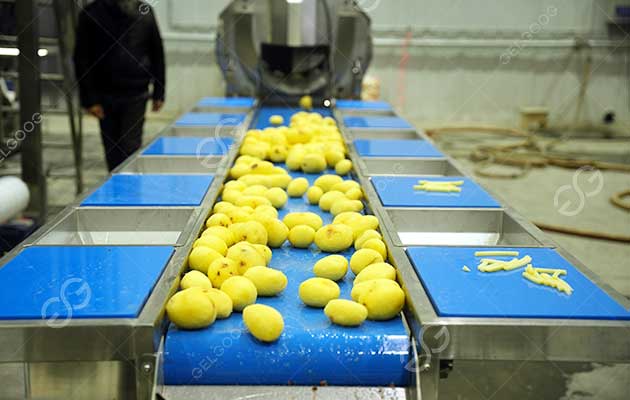
What is the purpose of peeling potatoes?
1. Improving product appearance
The skin of a potato differs from its flesh in both color and texture; furthermore, the surface may be covered in soil, blemishes, or other impurities. If potatoes are cut into fries or chips without proper preparation, dark spots may appear on the surface of the final product, detracting from its overall appearance.
Peeling removes the outer skin and certain surface defects, resulting in a more uniform color across the potato flesh. For commercial potato chip and French fry production lines—where visual consistency is a priority—this serves as a crucial step in raw material pre-processing.
2. Removing the skin and surface impurities
During cultivation, harvesting, and transportation, potatoes often accumulate soil, root fibers, and other debris on their surfaces. Even after an initial wash, dirt may still remain trapped within the indentations of the skin.
The peeling process effectively removes the outer skin along with any attached impurities, minimizing the risk of contaminants carrying over into subsequent stages, such as slicing or cutting.
3. Enhancing the consistency of the final product
Proper peeling mitigates the impact of the skin on the appearance of the finished product, ensuring more consistent raw material conditions for subsequent steps like cutting, rinsing, and thermal processing.
What are the common methods for peeling potatoes?
In industrial potato processing, brush-based peeling machines and steam-peeling equipment are two common options. Since they operate on different peeling principles, they each have distinct characteristics regarding raw material loss, processing efficiency, and suitable application scenarios.
1. Brush-Type Peeling Machine
Brush-type peeling machines typically utilize rotating brush rollers or similar mechanical components. Through continuous contact between the brushes and the surface of the potatoes—combined with a water rinse—the potato skin and any adhering soil are gradually removed.
This method relies primarily on mechanical friction. If the potatoes have deep indentations, irregular shapes, or skins that are particularly difficult to remove, the processing time may need to be extended. However, since an excessively long processing time can lead to greater loss of the potato flesh, it is essential to carefully adjust the equipment parameters.
2. Steam Peeling
Steam peeling is an industrial method that uses high-temperature steam to rapidly process the outer layer of potatoes. Potatoes are placed into a specialized pressure vessel, into which steam is introduced at a set pressure and for a specific duration, causing the skin to heat up rapidly.
However, steam peeling equipment typically requires supporting systems—such as steam supply, pressure control, and safety mechanisms—which entail higher capital investment and more demanding operational management. Furthermore, if the temperature, pressure, or processing time is not set correctly, the outer layer of the potato flesh may become overheated, which can negatively affect subsequent processing stages.
When selecting equipment, the first step is to define the final product. If the primary output consists of French fries or potato chips, the required degree of peeling should be determined by considering the desired appearance of the finished product, subsequent cutting processes, and the acceptable level of raw material loss.
- Pre: NULL
- Next: Which Machine Is Good For Frying French Fries


